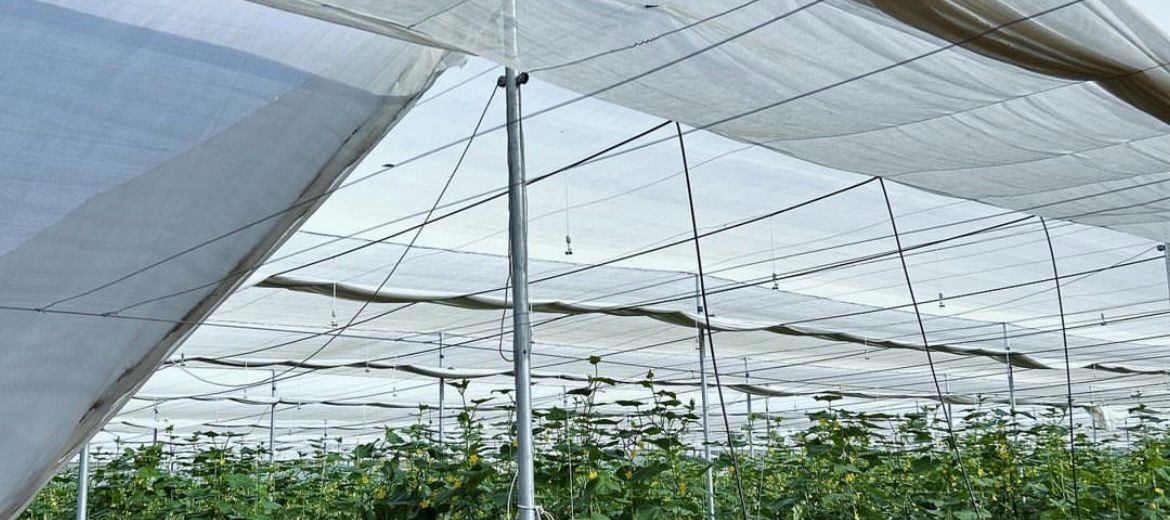
Punamiya Farm is equipped with a modern Shadenet House spread across 13,600 square meters, designed to support high-efficiency and controlled-environment agriculture. Our primary focus is on cultivating high-demand vegetable crops such as cucumber and tomato, leveraging seasonal cycles and advanced farming practices to maximize yield and quality. The first crop grown in the Shadenet House is cucumber, which has a total crop cycle of approximately six months. Fruiting begins as early as 35 days after planting, making it a fast-producing crop. Depending on the season, fruiting continues for 3 to 4 months during the summer and extends to 4 to 5 months in winter. At one time, we plant around 27,000 cucumber seeds, achieving a seasonal production capacity of up to 150 tons.
Alongside cucumber, we also cultivate tomatoes as part of our greenhouse operations. Tomato plants begin production approximately 2.5 months after transplantation and remain productive over a crop cycle that spans 8 to 9 months. This long-duration crop is carefully managed under the shaded structure to ensure optimal growth and extended fruiting periods. A single season of tomato cultivation yields between 125 to 150 tons, depending on the variety and climate conditions. The controlled environment of the Shadenet House allows for efficient pest and disease management, consistent water use, and protection from extreme weather—resulting in better quality produce and improved overall productivity.
Through our structured approach, Punamiya Farm not only ensures sustainable agricultural practices but also maintains a consistent supply of fresh produce to the market. The integration of large-scale cultivation, proper crop planning, and yield-focused management allows us to serve both local and regional demand effectively.